
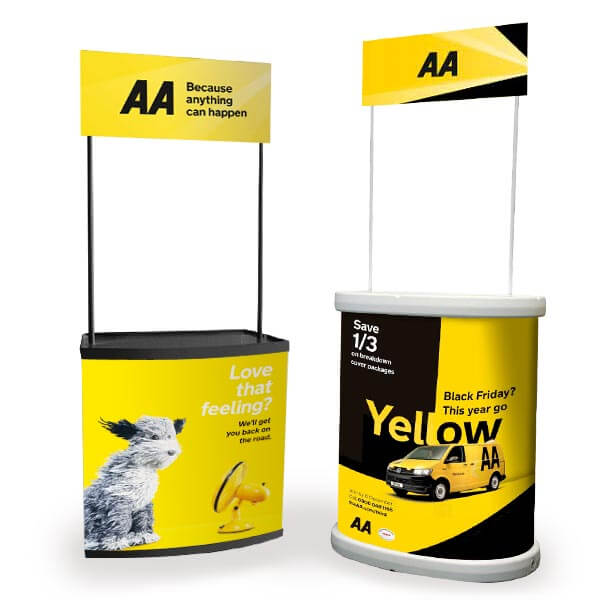
Roll-up banners stand as powerful marketing tools, allowing businesses to showcase their brand and messages effectively at various events and venues. Crafting successful roll-up banners involves strategic design choices and attention to detail. In this guide, we’ll explore essential strategies for designing roll-up banners that achieve maximum impact. Additionally, we’ll discuss the integration of elements like teardrop flag banner and promotional sampling stand tables to enhance the overall effectiveness of your display.
Strategic Design Principles
The foundation of successful roll-up banner design lies in strategic principles. Begin by defining your objectives and target audience. Choose visuals and graphics that resonate with your brand identity and message. Keep the design clean and uncluttered, prioritizing key information. Utilize bold typography and vibrant colors to grab attention. Ensure readability from a distance and maintain a cohesive visual theme throughout the banner.
Compelling Messaging Techniques
Effective roll-up banners rely on compelling messaging techniques. Craft concise and impactful headlines that convey your key message at a glance. Utilize bullet points and short paragraphs to highlight essential information. Avoid cluttering the banner with excessive text, focusing instead on delivering a clear and memorable message. Use language that speaks directly to your target audience and prompts action or engagement.
Consistent Branding Integration
Consistency in branding is essential for reinforcing brand identity and recognition. Incorporate your brand’s logo, colors, and fonts consistently throughout the roll-up banner design. Ensure that the banner aligns with your overall brand aesthetic and messaging. Consistent branding across all marketing materials, including promotional Sampling Stand Table helps build trust and credibility with your audience.
Enhancing Engagement with Interactive Elements
Integrating interactive elements like promotional sampling stand tables can elevate the engagement level of your roll-up banner display. Sampling stand tables provide an opportunity to interact directly with potential customers, offering product demonstrations or samples that complement the messaging on your banner. By incorporating interactive experiences, you create a memorable and immersive brand experience that resonates with attendees.
Strategic Placement for Maximum Exposure
Strategic placement of roll-up banners within the event space is crucial for maximizing exposure and impact. Choose high-traffic areas where the banners will be prominently displayed and easily visible to attendees. Consider factors such as foot traffic flow, line of sight, and proximity to entrances or key attractions. Strategic placement ensures that your banners capture the attention of your target audience effectively.
Iterative Testing and Optimization
Before finalizing your roll-up banner design, conduct iterative testing and optimization to ensure its effectiveness. Print test proofs to evaluate color accuracy, readability, and overall visual appeal. Seek feedback from colleagues, clients, or event organizers to identify any areas for improvement. Use this feedback to refine and optimize your design until it achieves the desired impact and resonates with your audience effectively.
In conclusion
designing successful roll-up banners requires a combination of strategic design principles, compelling messaging techniques, consistent branding integration, engagement with interactive elements, strategic placement, and iterative testing and optimization. By implementing these strategies and integrating elements like teardrop flag banners and promotional sampling stand tables, you can create impactful roll-up banner displays that leave a lasting impression on your audience and drive success for your brand.